Home / Does vinegar or bleach kill mold?
Does vinegar or bleach kill mold?
Vinegar and bleach are the most common mold advice online. Here is what government and university sources actually say, including where they disagree.
Talk to a local provider: (000) 000-0000Updated November 6, 2026. Every statement is linked to the agency that made it.
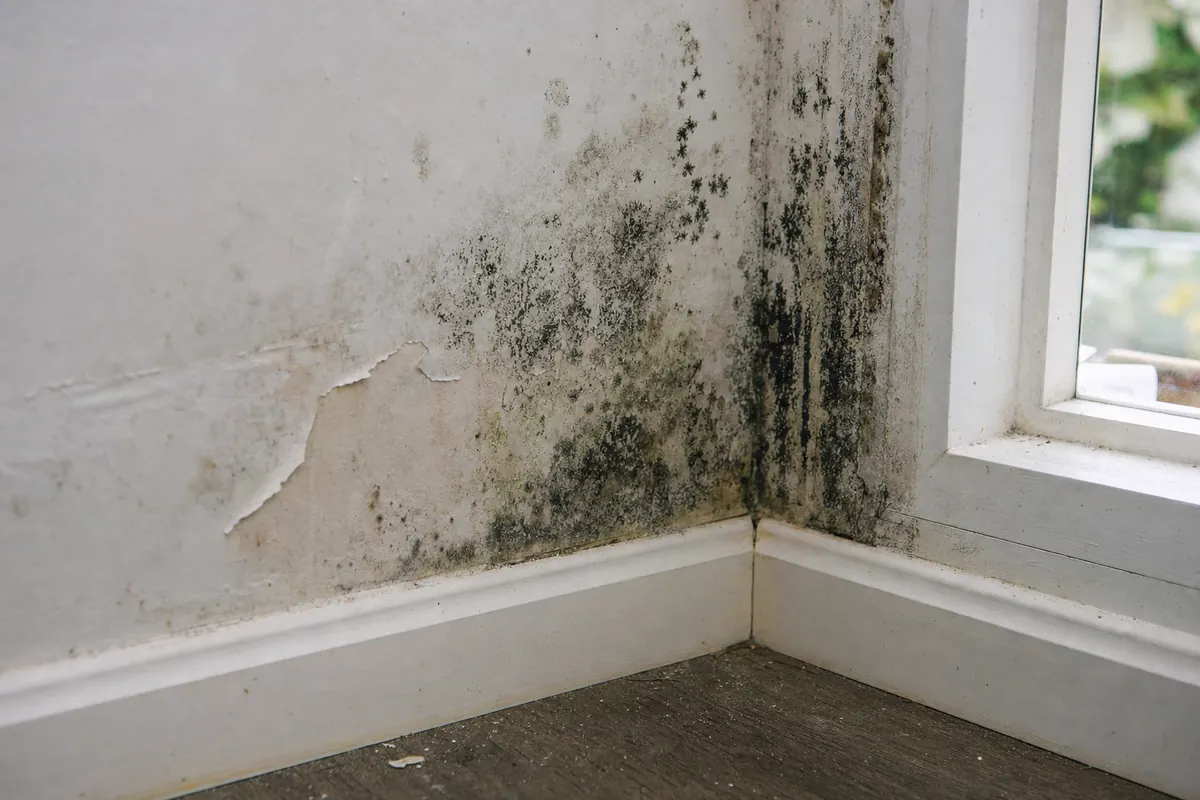
Vinegar
- None of the EPA, CDC, FEMA, FDA or NIEHS mold pages we reviewed recommend vinegar for mold.
- One university extension source does: Oregon State University Extension suggests a half water, half vinegar spray followed by scrubbing[4], and says it cleans and kills the mold[4]. It does not cite testing.
- You may have seen "vinegar kills 82% of mold." We could not find any agency or university source for that number.
- Never mix vinegar and bleach. University of Missouri Extension warns never to mix chlorine bleach with ammonia or vinegar[5].
Bleach: the agencies do not agree
- EPA: does not recommend bleach or other biocides as a routine part of mold cleanup[6], notes that biocides are toxic to people too[2], and says disinfectants work poorly unless surfaces are cleaned with detergent first[7].
- CDC: says bleach or dish detergent can be used, with no more than 1 cup of bleach per gallon of water[8], using regular unscented bleach[9]. Never use bleach in a closed space[10], and never mix it with ammonia or any other cleanser[8].
- FEMA: its Florida flood fact sheet tells residents to clean all hard surfaces and items with bleach[11].
- UF/IFAS Extension (Florida): suggests 1/2 to 1 cup of bleach per gallon on colorfast, nonmetal surfaces, and says not to use bleach in the air conditioning system[12].
Where they agree: bleach is for hard, non-porous surfaces. Many disinfectants are not meant for surfaces that absorb water, such as fabrics or unfinished wood[7], and porous materials like carpet or ceiling tiles may need to be thrown away[6].
If you use bleach
- Clean with water and detergent first[7].
- Wear non-porous gloves, boots and eye protection, and open windows and doors[9].
- Leave the product on for the contact time on its label[7].
- Do not mix it with anything[8]; poison control centers get many reports of accidental bleach exposure every year[7].
Mold back after cleaning? Disinfectants do not prevent regrowth[5]; the moisture source has to be fixed. For anything over 10 square feet in Florida, use a licensed remediator[13][14]. Call (000) 000-0000
Questions
Does vinegar kill mold?
No federal agency page we reviewed recommends it. Oregon State University Extension suggests a half vinegar, half water spray[4], but either way the EPA says dead mold still has to be removed[1].
Sources
Every figure on this page links to its source. Statutes are from the 2026 Florida Statutes. FEMA and NOAA figures were downloaded on 6 November 2026.
- Mold Course Chapter 1. U.S. Environmental Protection Agency. https://www.epa.gov/mold/mold-course-chapter-1 Accessed 6 Nov 2026.
- Mold Remediation in Schools and Commercial Buildings Guide: Chapter 3. U.S. Environmental Protection Agency. https://www.epa.gov/mold/mold-remediation-schools-and-commercial-buildings-guide-chapter-3 Accessed 6 Nov 2026.
- Mold Cleanup in Your Home. U.S. Environmental Protection Agency. https://www.epa.gov/mold/mold-cleanup-your-home Accessed 6 Nov 2026.
- How to get rid of mold in my home? (Ask Extension) [UNIVERSITY EXTENSION]. Oregon State University Extension Service. https://extension.oregonstate.edu/ask-extension/featured/how-get-rid-mold-my-home Accessed 6 Nov 2026.
- Resources for Your Flooded Home (MP904, PDF) [UNIVERSITY EXTENSION]. University of Missouri Extension. https://extension.missouri.edu/media/wysiwyg/Extensiondata/Pub/pdf/miscpubs/mp0904.pdf Accessed 6 Nov 2026.
- A Brief Guide to Mold, Moisture and Your Home. U.S. Environmental Protection Agency. https://www.epa.gov/mold/brief-guide-mold-moisture-and-your-home Accessed 6 Nov 2026.
- Flood Cleanup to Protect Indoor Air and Your Health. U.S. Environmental Protection Agency. https://www.epa.gov/emergencies-iaq/flood-cleanup-protect-indoor-air-and-your-health Accessed 6 Nov 2026.
- Mold Clean Up. U.S. Centers for Disease Control and Prevention. https://www.cdc.gov/mold-health/about/clean-up.html Accessed 6 Nov 2026.
- How to Safely Clean and Sanitize with Bleach. U.S. Centers for Disease Control and Prevention. https://www.cdc.gov/natural-disasters/safety/how-to-safely-clean-and-sanitize-with-bleach.html Accessed 6 Nov 2026.
- Guidelines for Cleaning Safely After a Disaster. U.S. Centers for Disease Control and Prevention. https://www.cdc.gov/natural-disasters/safety/index.html Accessed 6 Nov 2026.
- Don't Wait to Begin Cleaning, Making Repairs (Hurricane Idalia, Florida, DR-4734). Federal Emergency Management Agency (FEMA). https://www.fema.gov/fact-sheet/dont-wait-begin-cleaning-making-repairs Accessed 6 Nov 2026.
- Cleaning Mold After a Flood (PDF) [UNIVERSITY EXTENSION]. University of Florida IFAS Extension (UF/IFAS blog-hosted handout). https://blogs.ifas.ufl.edu/news/files/2019/08/Cleaning-Mold-after-a-Flood.pdf Accessed 6 Nov 2026.
- Section 468.8411, 2026 Florida Statutes. The Florida Senate (Florida Statutes). https://www.flsenate.gov/Laws/Statutes/2026/468.8411 Accessed 6 Nov 2026.
- Section 468.8419, 2026 Florida Statutes. The Florida Senate (Florida Statutes). https://www.flsenate.gov/Laws/Statutes/2026/468.8419 Accessed 6 Nov 2026.